
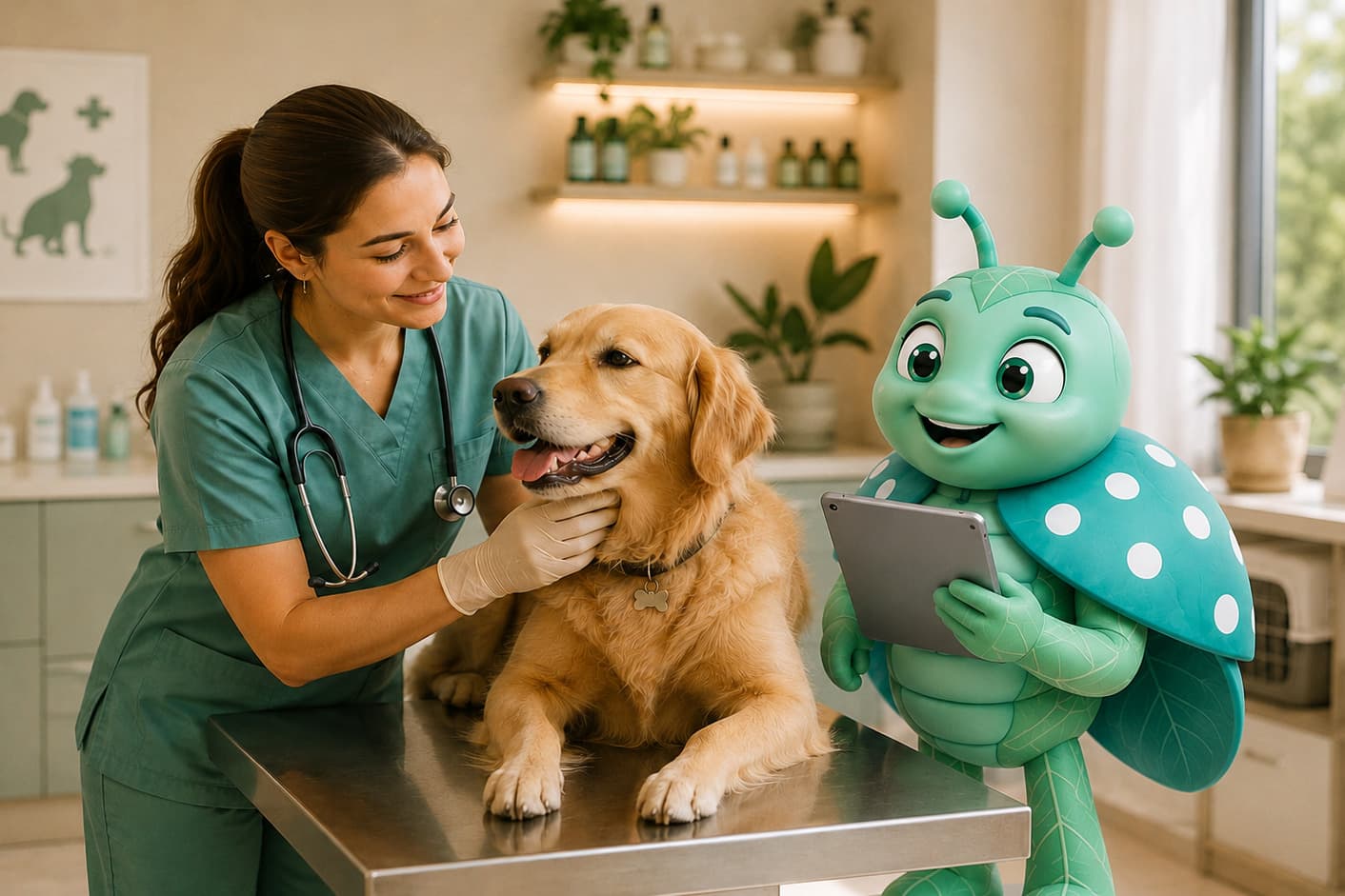
Most businesses track one thing per appointment: the customer. A vet clinic tracks two. There's the patient in the room, a cat or a dog with a name and a vaccine history. And there's the person holding the leash, with a phone number and a preferred time to be called. Linked, sure, but not the same thing.
Put both of those into a paper diary and it works. For a while. Then a booster gets missed, a reminder lands with the wrong owner, and an allergy note goes missing right when you need it most. This guide is about heading that off. We'll cover what vet appointment management actually involves, how to keep the pet and the owner straight on one record, how to cut no-shows with reminders, and what to watch for with the owner's data.
What Is Veterinary Clinic Appointment Management?
The short version
It's the practice of putting vet availability, pet and owner bookings, and vaccine and check-up dates on one shared digital calendar — so clashes get blocked, reminders go out on their own, and no booster slips through. The goal is simple: keep every pet on schedule and every owner easy to reach.
In practice, it means dropping the notebook and the loose files. No more scribbling the pet's history in one place and the owner's number in another. Everything on one screen instead.
For most clinics the hardest part is just taking the first step. Those scattered WhatsApp threads and the paper diary have to go. Swap them for a proper scheduling setup and keeping two layers of records straight stops being a daily fight.
Why Records Work Differently in a Vet Clinic
Here's the thing that makes vet clinics odd. Most places handle one contact per visit. You handle two. The patient is the pet; the client is the owner. They're tied together, but each carries its own information, and the care falls apart the moment you lose sight of either one.
Get that link right and a lot just sorts itself out. The right pet lands with the right owner, every time. The vaccine and treatment history is sitting there during the visit, not buried in last year's notebook. And when you need to reach the owner about a result or a follow-up, the number is one tap away.
Lose the link, though, and small mistakes start creeping in. A reminder to the wrong person. A booster nobody scheduled. An allergy note that exists somewhere, in theory, but nobody can actually find.
When the wrong owner gets the text
Two cats, same name, logged in two different notebooks. A vaccine reminder goes out, the numbers get crossed, and the message lands with the wrong owner. The right one hears nothing and misses the booster. On a system where each pet is tied to its owner on one record, that mix-up just can't happen — every reminder goes to the right number.
How to Keep Two-Layer Records: Owner and Patient
It comes down to one card per pet, with the owner attached to it. The pet's clinical data and the owner's contact details, all in the same place. Whoever sees the pet next just picks up where the last visit left off, instead of reconstructing the whole story from scratch.
Combining pet and owner info on one card enables fast, safe service.
Once it all lives in one place, the next vaccine or check-up surfaces on its own as the date gets close. Nobody has to remember to go dig for it.
The rabies shot nobody remembered
A dog needs its rabies vaccine again in a year. The vet mentions it during the visit, and that's where the note stays — in the vet's head. Months pass. No one calls, the date comes and goes, the vaccine doesn't happen. Write that date to the pet's card and the calendar up front, though, and the dog drops onto the list on its own as the date nears. The owner gets a reminder. The shot happens on time.
Cutting No-Shows With Vaccine and Check-Up Reminders
In vet care, reminders aren't just about protecting your schedule. They protect the pet. A nudge about an upcoming vaccine tells the owner you're keeping an eye on things, and it brings a regular visit back through the door. What works best is pretty specific: remind early, use more than one channel, and make confirming or rescheduling a single tap. That's it.
Figures are illustrative and vary by clinic. The direction, though, holds: early, multi-channel reminders bring more pets in on time.
Three Steps to Get Set Up
It sounds like a big project. It really isn't. Three moves get you most of the way.
Coming off an older setup? Our guide to switching scheduling software walks through doing it without losing your history.
Data Protection: The Owner's Details Count Too
There's a distinction worth getting right here. The pet's health records usually fall outside personal-data rules. The owner's name, phone and address? Those don't. So the side you really have to guard is the owner's.
In practice that's not complicated. Keep the owner's details encrypted so the wrong people can't read them. Limit access to the staff who actually need it. Back everything up on a schedule. And keep it organized, rather than sitting in an open notebook or a shared file where anyone could stumble into it.
The pet is your patient, the owner is your data
Pet health records may not count as personal data, but the owner's name, phone and address do. Keeping that data encrypted, access-controlled and organized isn't a nice-to-have. It's the baseline, and a paper diary doesn't get you there.
What You Actually Gain
You feel the difference fast, in the ordinary run of the day. No-shows and missed boosters drop, because the reminders do the chasing instead of you. Service speeds up, because the pet's history and the owner's number are already sitting together on one card. And nothing gets lost, because that record lives in one encrypted place instead of scattered across a shelf of notebooks.
Then there's the part that's easy to miss. Everyone works from the same calendar and the same notes, so the team stops tripping over each other. Encryption, backups, access control for the owner's data, all of it comes built in, so the security side gets handled without anyone thinking about it. Want to put a number on the time you'd get back? Here's how to calculate practice efficiency.
Where Calemio Fits
Calemio brings pet and owner records, vaccine and check-up reminders, and multi-vet calendars into one place. Encrypted, privacy-compliant records and smart planning from Mio, the built-in AI assistant, take the admin load off the clinic. You get to spend your attention on the patients instead of the paperwork.
A normal morning looks like this. Reception opens up and the whole day is right there on one screen, every vet, empty slots and all. A pet walks in, and its card is one click away: vaccine history, next check-up, the owner's number. Meanwhile tomorrow's reminders already went out in the background. Nobody's stuck on the phone confirming appointments while the waiting room fills up.
That's the whole idea, really. Trade the notebook for a system and the day gets calmer and safer, for your patients and for you.
A Quick Checklist
Reviewing how your clinic handles bookings and records? This is a fair place to start:
- Every vet's calendar lives on one digital screen.
- Each pet is tied to its owner on a single, encrypted digital card.
- The system blocks overlapping bookings automatically.
- Vaccine and check-up dates are added to the card and calendar up front.
- An automatic SMS/WhatsApp reminder goes out the day before each visit.
- Access to owner data is role-based, with access logged.
- Automatic backups run on a regular schedule.
- No-show and missed-booster rates get reviewed now and then.
Frequently Asked Questions
How do you manage appointments in a veterinary clinic?
Put every vet, service and patient on one shared calendar, and link each pet to its owner on a single record card. From there the system blocks overlapping bookings, keeps availability visible, and fires off a reminder for each appointment automatically. That clears out the double-bookings and lost notes you get from juggling notebooks or a shared spreadsheet.
Why do veterinary clinics track both the pet and the owner?
Records in a vet clinic are two-layered: the pet is the patient and the owner is the client. The pet's vaccine, allergy and treatment history drives the care, while the owner's contact details drive reminders and communication. Linking both on one card lets staff work quickly and safely, without ever matching the wrong pet to the wrong owner.
How can a vet clinic reduce no-shows?
Send a reminder before the appointment and use more than one channel, such as SMS plus WhatsApp. Let owners confirm or reschedule in a single tap, and book the next check-up or booster before they leave. Early, multi-channel reminders consistently bring more pets in on time.
How should a vet clinic handle vaccine and check-up reminders?
Add each pet's vaccine and check-up dates to its record, then automate the reminders so owners hear from you as the due date approaches. These nudges protect the pet's health and bring regular visits back to the clinic — good for the care and for the revenue.
Is owner data in a veterinary clinic subject to data-protection rules?
Yes. Even where pet health records fall outside personal-data rules, the owner's name, phone number and address don't. You're responsible for keeping that data encrypted, access-controlled and organized, rather than parked in an open notebook or a shared file.
Which appointment software should a veterinary clinic use?
Look for linked pet and owner records, multi-vet calendars, automatic SMS and WhatsApp reminders, and privacy-compliant data handling working together. Calemio bundles those into one place, and its AI assistant, Mio, takes some of the daily admin load off the front desk.
Related articles
Start using Calemio for free
Encrypted, compliant and simple. Built for independent therapists and clinics.
Start free