

For most therapists, the hardest part of the day isn't the session. It's everything around it.
The tiredness usually hits around 9 PM. You're thumbing out a reply to one more "any chance you can squeeze me in Thursday?" text. Then it turns up again Tuesday morning, when you spot two clients booked into the same hour. And it peaks at the worst possible moment: you're squinting at a half-legible note in your planner, trying to work out which person in your phone it actually belongs to.
That friction? It's the whole reason scheduling software exists. But in 2026 it has stopped being "a calendar app." A good one pulls booking, client messages, session notes, payments, and data security into a single flow that doesn't fight you at every step.
This guide walks through all of it. What the software actually is. Which features earn their keep. And how to pick one that fits the way you already work.
What Is Therapist Scheduling Software?
The short version
It's a platform that moves a therapist's whole workflow online, not just the calendar. On top of scheduling, it handles automated reminders, digital intake forms, encrypted session notes, payment tracking, and utilization reports. The point is simple: it runs everything outside the room so you can give your attention to what happens inside it.
A paper planner stores dates. An Excel file stores rows. Scheduling software does something different. It takes your clinical workflow, the whole messy chain of it, and moves it somewhere you can actually see and search.
So here's what a solid platform tends to cover.
Booking and calendar. Session lengths, buffers, recurring slots, supervision hours, all of it on one screen.
Automated reminders. A quiet nudge goes to the client 24 hours ahead by SMS or WhatsApp. No-shows drop. You'll feel it within a month.
Intake forms. The second someone books, a form goes out on its own. You walk into the first session already knowing the basics.
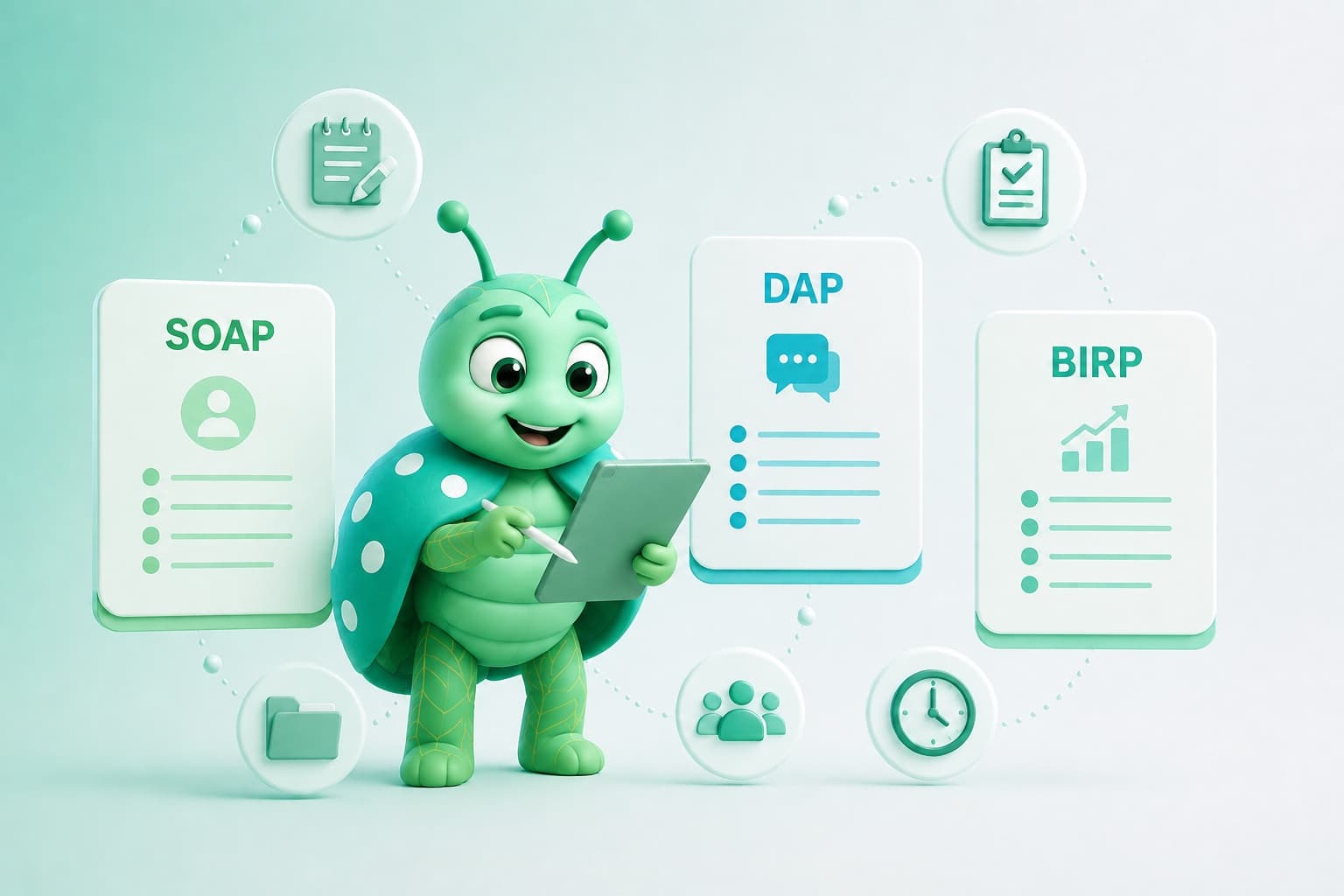
Encrypted session notes. SOAP, DAP, a template of your own, whatever you use. Encrypted end to end, readable only by you.
Reports that mean something. Weekly sessions, no-show rate, active clients. Not a wall of numbers, just the few figures that tell you how the practice is really doing.
Why Does It Matter in 2026?
Running a practice off a planner or a spreadsheet has two problems. One is practical. The other is legal, and it's the one that can actually cost you money.
Start with the practical. Manual systems creak the moment you grow. Ten active clients? Fine, you'll cope. Push toward thirty, though, and something gives. Suddenly you're losing a couple of hours a week just to scheduling, and the odds of a double-booking climb fast.
The legal side is heavier. In Turkey, the data protection law (KVKK, the local equivalent of the GDPR) treats health data as "special-category personal data." That means explicit consent, secure storage, and an access log you can actually produce if someone asks. A spreadsheet gives you none of that. Lose a USB stick, or pick up a virus on the laptop where everything lives, and you're not looking at an inconvenience. You're looking at a fine. We go deeper on this in the KVKK and GDPR compliance guide for therapists.
The Tuesday two clients showed up at once
A solo therapist takes a booking over WhatsApp on Sunday and jots it in the planner. On Monday she takes another over the phone and, distracted, writes it for the same 10:00 slot. Nothing flags it, because nothing is watching. Tuesday morning, two people are in the waiting room for the same hour. One gets sent home. On a system where the calendar blocks a slot the instant it's taken, that clash never reaches the door.
Which Features Actually Matter?
There are dozens of tools out there. Nearly all of them can book an appointment. Far fewer are built around how a therapist actually works. These seven? The load-bearing ones.
1. KVKK and GDPR compliance. Data stored in the EU or Turkey, encrypted end to end, with a Data Processing Agreement available when you ask for it. Non-negotiable.
2. Encrypted session notes. Notes only you can open. And never, under any circumstances, fed into AI training. If the contract doesn't say that plainly, keep looking. If you want the note formats themselves, our SOAP, DAP and BIRP notes guide breaks them down.
3. Automated SMS or WhatsApp reminders. Sending reminders by hand can eat an hour a day. Automation hands that hour back. Simple as that. More on the ways to reduce no-shows if that's your main pain.
4. Automated intake forms. A booking comes in, a branded form goes out, the answers save themselves. No chasing.
5. Templates that match your approach. Thought records for CBT. SUDs tracking for EMDR. Shared goal forms for couples work. The right structure saves real time. See how to build a therapy intake form that fits your method.
6. Buffers and do-not-disturb windows. The gap between sessions is for breathing and writing notes, not for taking calls. A good tool protects it without you asking twice.
7. One-click cancellation. Annual lock-ins and exit fees are a red flag. A product worth using earns your money every single month.
Solo Therapist vs. Clinic: Where the Needs Split
Work on your own and the list is short. A clean interface. Quick setup. A price that makes sense. Fifty-minute blocks, automatic reminders, encrypted notes, and you're most of the way there.
Run a clinic with several therapists, though, and it gets longer in a hurry. Roles and permissions. Revenue broken out per therapist. Referrals across locations. Invoicing an insurer will actually accept. And a way to keep supervision hours on record for license renewal.
And then there's the in-between case, the one plenty of people actually live in. You're at a clinic during the week and you see a few private clients on the weekend. Here, isolated workspaces stop being a nice extra. Clinic data cannot leak into your private practice. Your private practice cannot leak into the clinic's. That wall has to be real.
How to Choose: 5 Questions Worth Asking
Before you sign up for a single trial, sit with these.
Where does my data actually live? Servers outside the EU or Turkey carry compliance risk under KVKK. Ask before you commit.
Are my notes used to train AI? You want an explicit no. In writing.
Can I take my data with me when I go? It's yours. Not the vendor's. Export should be easy.
Is there a real mobile app? A good slice of your practice gets run from your phone between sessions. The mobile experience matters as much as the desktop one.
Am I locked into an annual contract? Monthly billing with one-click cancellation usually tells you the product plans to earn its keep rather than trap you. If you want a head-to-head, we keep an updated roundup of the best therapist scheduling tools for 2026.
What You Actually Get Out of It
Scheduling software won't do the therapy. That part stays yours. What it takes off your plate is everything else: the late-night WhatsApp replies, the planner-flipping, that low background hum of "did I forget something?"
And the reminders alone move the needle on no-shows more than most people would guess.
Figures are illustrative and shift from practice to practice. The direction holds, though: early, multi-channel reminders bring more clients through the door.
The payoff shows up across the whole week, not in one dramatic moment.
- Fewer no-shows, because the reminders do the chasing for you.
- Fewer double-bookings, because the calendar catches the clash before it happens.
- Client records in one place, encrypted, instead of scattered across notebooks and threads.
- Less admin, so more of the day actually goes to clients.
- Safer data by default, with encryption, backups and access logs built in.
- Your evenings back, because the routine stuff stops following you home.
The best tools are the quiet ones. They just work in the background. Open the app in the morning and the day is laid out. Close it at night and tomorrow is already set up. The hours in between? Those belong to you.
The USB stick that took the whole practice with it
Everything lives in one spreadsheet on a laptop, with a backup copy on a USB stick in the desk drawer. The laptop dies over a weekend. The drawer, it turns out, holds a version three months out of date. Two clients' recent notes are simply gone, and there's no access log to show what was ever there. On an encrypted platform with automatic backups, none of that is a crisis. It's a non-event.
A Quick Checklist
Sizing up a tool, or wondering whether your current setup is enough? Run down this list.
- Data is stored in the EU or Turkey and encrypted end to end.
- Session notes are readable only by you, and never used for AI training.
- Automatic SMS or WhatsApp reminders go out before each session.
- Intake forms send themselves the moment a client books.
- Note templates match your approach (CBT, EMDR, couples, your own).
- Buffers and do-not-disturb windows are protected automatically.
- You can export your data, and cancel, without a fight.
- Access to client data is role-based and logged.
Simplify Your Practice with Calemio
Calemio brings appointments, client records and reminders into one place. Automated SMS and WhatsApp reminders bring the no-show rate down. End-to-end encrypted notes keep client history and treatment plans in a single secure profile. Isolated workspaces keep clinic and private-practice data cleanly apart. All of it built to be KVKK-compliant and encrypted, whether you work solo or run a clinic with a full roster.
Trading a notebook for a system just makes the work safer and calmer, for you and for your clients. You can start a free trial, no credit card needed.
Frequently Asked Questions
What is therapist scheduling software?
It's a platform that moves a therapist's whole workflow online, not just the appointments. Alongside the calendar, it handles automated reminders, digital intake forms, encrypted session notes, payment tracking and utilization reports. In short, it runs everything outside the session so you can focus on the session itself.
How does therapist scheduling software reduce no-shows?
Most no-shows come down to a client forgetting or never confirming. Automated SMS and WhatsApp reminders sent 24 hours ahead, plus one-touch confirmation and easy rescheduling, noticeably cut missed appointments. Using more than one channel works better than leaning on a single one.
Is therapist scheduling software KVKK and GDPR compliant?
It can be, but check before you trust it. Health data counts as special-category personal data, so the tool should store data in EU or Turkey data centers, encrypt notes end to end, keep access logs, and offer a Data Processing Agreement on request. A spreadsheet or paper planner meets none of that.
How do I choose the right scheduling software for my practice?
Ask five things before you commit: Where is my data stored? Are my notes used to train AI? Can I export my data if I leave? Is there a real mobile app? And am I locked into an annual contract? Monthly billing with one-click cancellation is usually the sign of a product that plans to earn your trust rather than trap you.
Do solo therapists and clinics need different software?
Their priorities split. A solo therapist wants a clean interface, quick setup, reminders and encrypted notes. A multi-therapist clinic also needs roles and permissions, per-therapist revenue reporting, cross-location referrals and supervision records. If you do both, isolated workspaces are essential so clinic and private-practice data never mix.
Related articles


Start using Calemio for free
Encrypted, compliant and simple. Built for independent therapists and clinics.
Start free